


Most customers who come to Pepin Manufacturing for the first time have the material, width, and adhesive dialed in. Core size, roll diameter, and packaging? Those come up later, sometimes after the rolls arrive, and do not fit the equipment.
Core sizes, roll diameters, and packaging are not afterthoughts in flexible material converting. They determine whether your converted material works in your process, ships without damage, and integrates cleanly into your supply chain.
We address these specifications during the quoting process, not after production is complete.
Why Core Size Is Critical in Converting
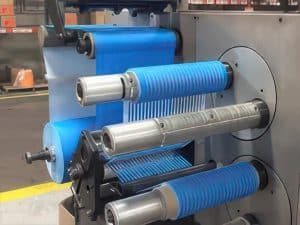
The core is the cardboard or plastic tube around which your slit or wound roll is built. It sounds like a minor detail. In practice, it drives several decisions that affect how your material performs downstream.
Core size affects:
- Equipment compatibility: Core sizes must match your machinery. Using adapters or workarounds to fit mismatched cores creates avoidable production downtime.
- Roll stability: Large rolls on undersized cores cause tension issues, often leading to telescoping or material deformation in thin films and adhesives.
- Winding tension: Starting core diameter dictates tension buildup. Proper sizing is critical to protecting the integrity of sensitive substrates like hydrogels and thin foils.
Common core inner diameters we work with at PMI include 1-inch, 1.5-inch, 3-inch, and custom sizes specified by the customer. We confirm core compatibility at the quoting stage, so there are no surprises when the rolls arrive at your facility.
Roll Diameter: Balancing Capacity and Handling
Roll diameter is a function of how much material you want on each roll and what your equipment and handling environment can accommodate.
Larger diameters mean more material per roll and fewer changeovers on your line, which improves efficiency on high-volume production runs. But larger rolls also mean more weight, different storage requirements, and potentially different handling equipment on your end.
For customers in regulated industries like medical device manufacturing, smaller roll diameters also support traceability. Shorter rolls mean tighter lot control, which matters when documentation requirements trace material through each production step.
We work with customers to determine roll diameter based on:
- Equipment specifications and maximum roll capacity at the point of use
- Weight limits for manual handling in their facility
- Lot size and traceability requirements for regulated applications
- Storage and shelf space constraints
- Shipping efficiency when roll count per pallet affects freight cost
Our ISO 13485-certified facility documents these specifications as part of the job setup, which means repeat orders reproduce the same roll configuration every time without reconfirming parameters from scratch.
Packaging Considerations That Protect Your Investment
A precisely slit, correctly wound roll of pressure-sensitive adhesive or specialty film loses its value quickly if the packaging does not protect it through transit and storage. This is the part of the converting conversation that gets the least attention and creates some of the most avoidable problems.
Packaging decisions we work through with customers include:
- Moisture barriers: Adhesive-coated materials, hydrogels, and certain films are sensitive to humidity. Barrier packaging that seals against moisture ingress is essential for materials that will be stored or shipped under variable conditions.
- End caps and core plugs: These protect roll ends from impact damage and prevent the core from crushing under stacking pressure during transit.
- Box versus poly bag versus shrink wrap: The right outer packaging depends on the material, the transit conditions, and whether the packaging needs to meet specific customer or regulatory requirements.
- Labeling and barcoding: For customers integrating converted rolls into automated inventory or regulated production systems, label format, placement, and information content are specifications we build into the packaging plan.
- Pallet configuration and stack height: For large volume orders, how rolls are palletized affects both transit integrity and how efficiently your receiving team can put material away.
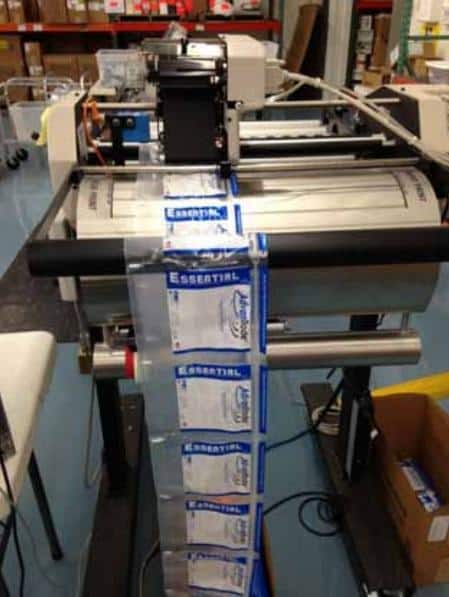
Our contract packaging and assembly capabilities at PMI mean we handle these decisions under the same roof as the converting work itself. Customers do not need to coordinate with a separate packaging vendor or manage the handoff between converting and packaging as separate logistics steps.
Single-Source Simplicity From Converting Through Packaging
PMI performs all precision slitting, winding, die-cutting, laminating, and packaging at our Lake City, Minnesota, facility. By centralizing these services under one ISO 13485 quality management system, we ensure full traceability and consistency at every production stage.
Consolidating your supply chain with a single source reduces coordination overhead and compresses lead times. It provides you with one point of contact, ensuring quick pivots whenever specifications change.
Our team brings a collaborative approach to every project. From initial discussions regarding core sizes and roll diameters through to final delivery, our technical depth and responsiveness remain constant. This commitment is why our customers return and consistently recommend our services to others.
Get the Specifications Right Before Production Starts
Core sizes, roll diameters, and packaging are not details to sort out after conversion is complete. They are specifications that shape how your material performs, how your line runs, and how your supply chain holds together.
We treat them as first-order decisions because getting them right from the start saves everyone time, cost, and frustration downstream. Contact our team to discuss your project requirements and request a quote.
Frequently Asked Questions
What core sizes does PMI stock, and can we specify a custom core?
We stock common inner diameters, including 1-inch, 1.5-inch, and 3-inch cores and work with custom sizes when your application requires it. Core material — cardboard versus plastic — can also be specified based on your equipment requirements and any regulatory considerations.
How do we determine the right roll diameter for our application?
We work through this with you during quoting. The key inputs are your equipment specifications, manual handling weight limits, lot size requirements for traceability, and storage constraints. Our team can recommend a starting point based on your material type and application if you are not sure where to begin.
Can PMI handle moisture-sensitive materials that require barrier packaging?
Yes. We package moisture-sensitive adhesives, films, and hydrogels with appropriate barrier materials as part of our contract packaging services. Packaging specifications are documented and reproduced consistently across repeat orders.
Does PMI provide labeling and barcoding on finished rolls and packages?
Yes. Labeling and barcoding are part of our contract packaging and assembly capabilities. We work with customers to confirm label format, content, and placement requirements before production begins.