

The sample approval looked perfect: precise dimensions, clean cuts, and correct materials. However, when production arrived, inconsistent thicknesses and uneven adhesive caused half the parts to fail inspection. Now, your assembly line is stalled, and you are scrambling for replacements that meet your specifications.
How consistent processes lead to reliable parts is not a mystery. Reliable parts come from standardized process control, not just good equipment or a single successful sample. It demands a rigorous system of discipline and commitment. Let’s look at how consistent processes create the reliability your products demand.
Summary: How Do Consistent Processes Lead to Reliable Parts?
Consistent processes lead to reliable parts by standardizing documentation, controlling materials, maintaining calibrated equipment, and using statistical process control to prevent variation. When every stage of production follows defined protocols, quality remains stable from the first article through full production.
Process Documentation Eliminates Guesswork and Variation
Reliable parts start with documented processes that capture every critical parameter affecting quality. When operators rely on memory, tribal knowledge, or best guesses, variation is inevitable regardless of skill level.
What comprehensive process documentation includes:
- Material Specs: Precise grades, thicknesses, and supplier requirements.
- Machine Settings: Defined speeds, pressures, and temperatures.
- Tooling: Specific maintenance intervals for dies and blades.
- Quality Checkpoints: Strict acceptance criteria at every production stage.
- Standard Procedures: Repeatable protocols for setup and changeover.
- Environmental Controls: Managed temperature and humidity for sensitive materials.
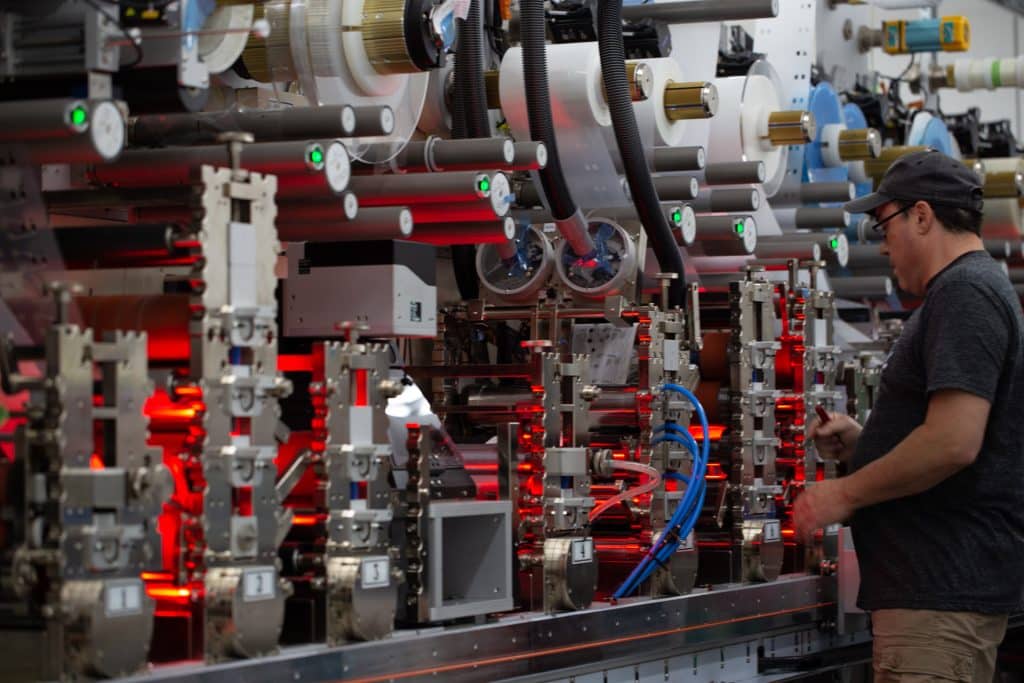
Pepin Manufacturing’s die-cutting and precision cutting operations use documented procedures to eliminate guesswork. Instead of making judgment calls on critical parameters, our operators follow proven protocols refined over three decades of manufacturing experience.
Standardized documentation is critical when manufacturing custom parts for different industries. It ensures your project receives the same precision and attention to detail, regardless of how busy the production floor is that day.
Material Control in Manufacturing Ensures Consistent Output
Even perfect processes fail when material inputs vary. Thickness variations, inconsistent adhesive properties, or changing material characteristics create parts that don’t meet specifications regardless of manufacturing precision.
Material control systems that support reliability:
- Qualified Suppliers: Verified lists with strict entry requirements.
- Incoming Inspection: Reviewing all specifications upon arrival.
- Lot Tracking: Linking finished parts to specific material batches.
- Managed Storage: Maintaining material properties through environmental controls.
- First-Article Testing: Confirming performance before full production.
- Material Certs: Complete documentation for full traceability.
For specialized applications like MarFree urethane solutions and custom electrode manufacturing for electrotherapy applications, material consistency directly affects product performance and safety.
Our rigorous material control ensures the urethane components or electrodes produced today perform identically to those manufactured months ago.
Equipment Calibration Prevents Drift and Protects Part Reliability
Manufacturing equipment gradually drifts from optimal settings through normal use. Dies wear, cutting blades dull, pressure systems lose calibration, and positioning accuracy degrades. Without preventive maintenance and regular calibration, parts slowly move out of specification.
Maintenance programs that support process consistency:
- Preventive Maintenance: Scheduled service to prevent quality issues.
- Regular Calibration: Verification at set intervals for accuracy.
- Tool Life Tracking: Replacing dies and blades before they fail.
- Capability Studies: Confirming equipment meets all process requirements.
- Condition Monitoring: Identifying wear before it impacts part quality.
Contract converting and fabrication operations serving multiple industries must maintain equipment capable of meeting varied specifications. A die-cutting system that’s “close enough” for one application may fail for tighter-tolerance requirements. Our maintenance programs ensure equipment capabilities exceed the most demanding specifications we encounter.
Statistical Process Control Catches Variation Before It Becomes Defects
Waiting until parts fail inspection to discover process problems wastes material and time while creating delivery delays. Statistical process control identifies trends toward specification limits before producing defective parts.
SPC implementation supporting reliability:
- Control Charts: Tracking critical dimensions and characteristics.
- Capability Analysis: Confirming processes meet customer requirements.
- Trend Identification: Enabling corrective action before defects occur.
- Real-Time Monitoring: Continuous oversight of critical operations.
- Data-Driven Improvement: Targeting and reducing process variation.
For high-volume production runs, statistical process control prevents the scenario where the first thousand parts meet specifications perfectly but parts 5,000 through 6,000 fail because of undetected process drift. Catching variation early protects both quality and delivery schedules.
Operator Training Maintains Process Consistency Across Shifts
Even the best documented processes and maintained equipment depend on operators who understand their role in maintaining consistency. Training programs ensure every operator approaches tasks the same way, regardless of experience level or shift assignment.
Training elements that keep production consistent:
- Standardized Procedures: Clear protocols for setup, operation, and quality checks.
- Competency Testing: Verified skills before independent operation.
- Cross-Training: Reducing reliance on individual operators.
- Improvement Training: Empowering staff to identify and solve problems.
- Quality Awareness: Educating teams on how variation impacts the customer.
Pepin Manufacturing is committed to delivering durable, high-performance solutions, including investing in operator training that sustains quality across all shifts and production teams. Your parts receive the same careful attention whether produced on the first shift Monday or the third shift Friday.
Quality Control Verification Provides Final Assurance
Multiple layers of quality control catch the occasional variation that escapes process controls while verifying that processes continue performing as designed.
Final quality checks that confirm part reliability:
- First-article inspection confirming new setups meet specifications
- In-process inspection at critical production stages
- Final inspection verifying finished parts before shipment
- Sampling plans appropriate for production volumes and risk levels
- Documented inspection results providing traceability
Our rigorous quality control processes ensure each component meets or exceeds industry standards from material selection through final product inspection. This verification provides confidence that parts leaving our facility will perform reliably in your applications.
Quality Control Verification Confirms Reliable Parts
For over thirty years, Pepin Manufacturing has delivered precision-engineered solutions through consistent processes in contract converting and fabrication. Whether you need rotary die-cutting, flatbed die-cutting, precision cutting, or contract packaging, our process control systems ensure the parts you receive today will match those delivered six months from now.
Contact us today to review your specifications and request a precision production quote.