

A medical device fails field testing because the adhesive backing degrades under body heat. An electronics manufacturer discovers their insulation film can’t handle the temperature swings their product requires. A diagnostic component delaminates during the slitting process, ruining an entire production run.
These costly failures trace back to a single critical decision made months earlier: material selection. Choosing the right type for precision components determines whether your product succeeds or fails.
Getting it right the first time saves thousands in retooling costs and prevents the reputation damage that comes with field failures.
Why the Right Material Determines Component Success
The material you choose affects every downstream process and ultimately determines your component’s performance in real-world conditions. This becomes especially critical for precision components where tolerances measured in microns matter and where products often face demanding environments.
At Pepin Manufacturing in Lake City, Minnesota, we’ve seen manufacturers face costly delays because their initial choice couldn’t withstand the precision slitting, die cutting, or laminating processes required for production.
The right material isn’t just about end-use performance; it needs to survive every manufacturing step while maintaining dimensional accuracy and cleanliness.
Key Questions Before Selecting Precision Materials
Before selecting materials, you need a clear picture of the environment and stresses your components will face.
Critical Questions to Answer:
- What temperatures will the component encounter during use and storage?
- Will it contact skin, body fluids, or other biological substances?
- What chemical exposures might it face?
- Does it need to maintain adhesion under moisture or humidity?
- What mechanical stresses will it endure?
- Are there regulatory requirements like biocompatibility or USP Class VI certification?
For medical applications, material selection directly impacts patient safety and regulatory approval. Medical-grade films, adhesives, and substrates must meet strict biocompatibility standards while performing consistently across production runs.
Material Categories for Precision Components
Different applications demand different material properties. Here, we are going to explore the main categories used in manufacturing.
Adhesive Materials
Pressure-sensitive adhesives serve countless applications from wound care to electronics assembly. The right adhesive selection depends on:
- Bond strength requirements
- Skin compatibility for medical use
- Temperature resistance
- Removability versus permanent bonding
- Aging characteristics
Medical applications often require hypoallergenic adhesives that bond reliably to skin while removing cleanly without trauma. Industrial applications might need aggressive adhesives that withstand chemical exposure or extreme temperatures.
Films and Foils
Medical-grade films and barrier films provide everything from moisture protection to dielectric insulation. Material thickness, clarity, tear resistance, and barrier properties all factor into selection.
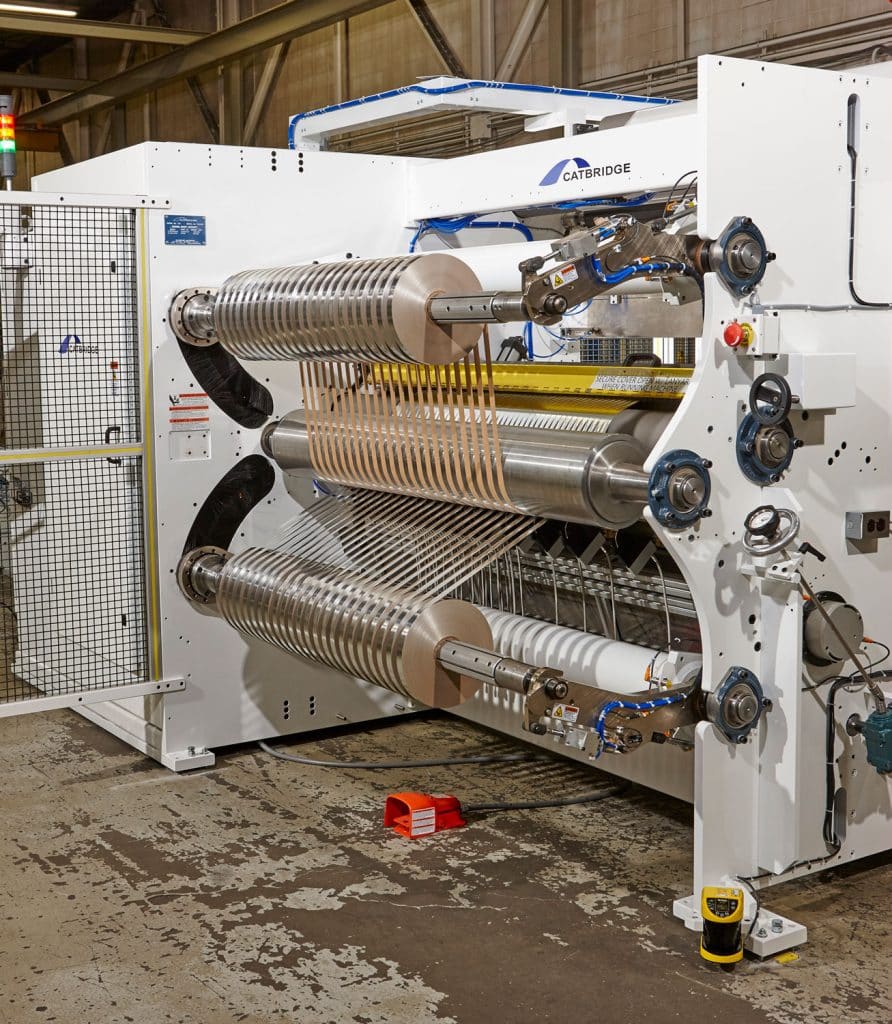
Ultra-thin films require careful handling during slitting to prevent wrinkling or deformation. Thicker films may present different challenges in achieving clean edges without burrs.
Foams and Nonwovens
Foam materials provide cushioning, gasketing, and conformability for applications ranging from wound care to industrial sealing. Nonwoven fabrics appear in medical drapes, filters, and personal care products.
Both types require specialized slitting techniques to achieve clean edges without compression or deformation that would affect component performance.
Hydrogels and Coated Substrates
Hydrogel materials serve critical roles in electrodes, transdermal patches, and wound care products. Their unique properties—high water content, skin compatibility, and electrical conductivity—demand careful handling throughout manufacturing.
Standard slitting techniques can damage hydrogels through excessive heat or pressure. The right material specification must account for these processing limits.
When the Best Material Is Not the Most Practical
The ideal material performs perfectly in the field while remaining practical to manufacture at scale. Sometimes, the “best” from a performance standpoint creates manufacturing challenges that make it impractical or uneconomical.
Manufacturing Considerations:
- Can it be slit to your required tolerances?
- Does it maintain dimensional stability during processing?
- Will it delaminate or lose adhesion during die cutting?
- Can it withstand the speeds required for production volumes?
- Does it create excessive dust or contamination?
Materials that look perfect in laboratory testing sometimes fail when subjected to high-speed manufacturing processes. Working with an experienced contract manufacturer helps identify potential issues before committing to your purchases.
Why Material Testing Is Critical Before Production
This selection shouldn’t be based on specifications alone. Testing confirms that your chosen material performs as expected through every manufacturing step and in end-use conditions.
Smart manufacturers run pilot productions to validate their choices before full-scale manufacturing. This reveals potential issues with slitting edge quality, adhesive bleed, dimensional changes, or contamination that lab testing might miss.
The Value of an Experienced Precision Manufacturing Partner
Choosing the right materials for precision components often benefits from partnering with manufacturers who work with diverse types daily. Pepin Manufacturing’s ISO-13485-certified facility processes everything from pressure-sensitive adhesives to hydrogels and coated substrates.
Our experience across these applications:
- Medical
- Electronics
- Industrial
- Personal care
Gives us a perspective on how different materials perform during precision slitting, die cutting, and converting. We’ve seen which of these maintain tight tolerances at high speeds and which create challenges that affect quality or efficiency.
Start Every Precision Project With the Right Material
Material selection sets the foundation for every precision component. Get it right, and manufacturing proceeds smoothly while your finished components perform reliably. Get it wrong, and you face delays, quality issues, and potentially costly redesigns.
Partner with manufacturers who understand the properties and can guide you toward choices that balance performance, manufacturability, and cost.
Contact Pepin Manufacturing to help you evaluate materials that meet your performance requirements while supporting efficient, high-quality manufacturing.